
2026 Portugal Pet Relocation Guide
A comprehensive roadmap for moving your furry family members to Portugal with ease and care.
2/23/20262 min read

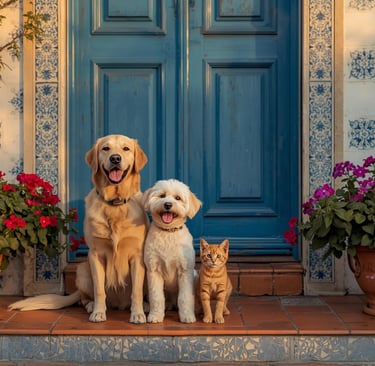
At IDN Portugal (Imobiliária das Nações), we know that a house only becomes a home when the whole family is there—and that includes your pets. Moving across borders with a cat or dog can feel daunting, but in 2026, Portugal remains one of the most pet-friendly destinations in the world. This guide will walk you through the essential logistics to ensure your "furry children" transition as smoothly as you do.
1. 2026 Entry Requirements: The Essentials
To bring your pet into Portugal, preparation should begin at least 3 to 4 months before your flight. The rules are governed by the DGAV (Direção-Geral de Alimentação e Veterinária).
Microchip: Your pet must be fitted with an ISO-compliant microchip (ISO 11784/11785) before receiving their rabies vaccination.
Rabies Vaccination: Must be administered after the microchip. If it’s the first vaccine, you must wait 21 days before traveling.
EU Pet Health Certificate: If you are coming from outside the EU (e.g., USA, UK, or China), you need an official health certificate endorsed by your home country's veterinary authority within 10 days of arrival.
DGAV Notification: You (or your agent) must notify the Portuguese airport vet at least 48 hours before arrival via an online form to ensure a smooth customs clearance.
2. Settling In: Registration and Vet Care
Once you land in Lisbon or Porto, your first task is local integration.
Registration (SIAC): Within 30 days of arrival, take your pet to a local Clínica Veterinária. They will register the microchip in the SIAC (Sistema de Informação de Animais de Companhia) database. This is a legal requirement in 2026 and ensures your pet can be returned to you if lost.
Choosing a Vet: Most Portuguese veterinarians speak excellent English. We recommend finding a local clinic in your neighborhood (e.g., Saldanha or Cascais) to establish a relationship for annual check-ups and the mandatory European Pet Passport if you plan to travel within the EU.
3. Navigating the City: Transport and Dining
Portugal’s lifestyle is deeply integrated with its pets.
Public Transport: Dogs are welcome on the Lisbon Metro, buses (Carris), and CP trains. Small pets must be in a carrier. Larger dogs must be on a short leash and wear a muzzle (focinheira). Guide dogs are always exempt from these restrictions.
Dining Out: Since 2018, Portuguese law allows pets inside restaurants and cafes if the establishment permits it. Look for the "Pet Friendly" sticker on windows. Most restaurants with outdoor terraces (esplanadas) are very welcoming and will often bring a bowl of water for your companion without being asked.
4. The Environment: A Pet-Friendly Culture
In 2026, Portugal’s commitment to animal welfare is visible everywhere.
Dog Parks: Neighborhoods like Parque das Nações and Cascais offer vast green spaces and dedicated "Parques Caninos" where dogs can run off-leash in a safe environment.
The Community: Neighbors in Portugal are generally very tolerant and friendly toward pets. It is common to see people walking their dogs late into the evening, making it a great way to meet other residents and integrate into the local social fabric.
How IDN Portugal Supports Your Whole Family
Relocating is about more than just finding a property; it's about a successful life transition. At IDN Portugal (Imobiliária das Nações), we can assist you in finding pet-friendly rentals or homes near the best parks, ensuring your move to Portugal is a joy for every family member—paws included.
Stay Connected
Subscribe to receive the latest market insights and visa policy updates directly in your inbox.
CONTACT
+351 966 678 666
© 2026 Imobiliária das Nações | IDN Portugal
License: AMI 25453 | VAT (NIPC): 517 221 241
Privacy Policy | Cookie Policy | Terms & Conditions
All rights reserved.
Rua Cais das Naus 12,
1990-304 Lisboa, Portugal